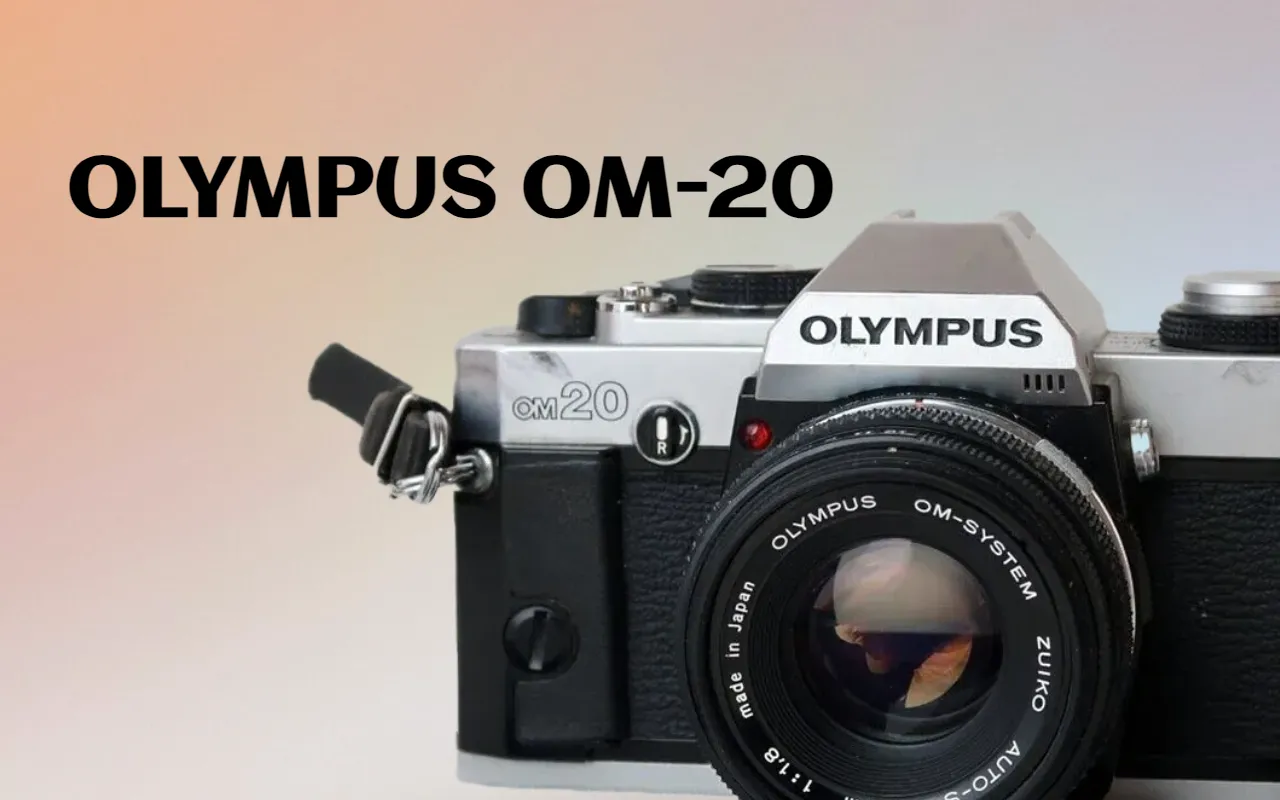
The Olympus OM-20 stands out in the photography market for its efficiency and simple design, distinguished by its accessibility and quality. Compared to the Olympus OM-10, both cameras belong to the same economical category, yet the OM-20 excels in ease of use as it lacks an adapter, unlike the OM-10.
Olympus OM-20 Specs
| Year Release | 1983 |
|---|---|
| US Name | Oympus OM-G |
| Type | SLR Reflex Camera |
| Film Format | 35mm |
| Lens Mount | Olympus OM, Bayonet |
| Shutter Speed | 2 sec to 1/1000 sec |
| Focusing Screen | Lumi-Micron Microprism/Split Image |
| View-Field | 93% Coverage |
| Magnification | 0.92X (50mm Lens at Infinity) |
| Synchro | X Contact, Direct Only |
| Exposure Control | Aperture-Priority, TTL OTF Metering |
| Measuring Range | EV-0.5~EV18 (ASA 100, F1.2) |
| Exposure Compensation | ±2 EV |
| Film Advance | Lever Type, 130° Angle |
| Motor Drive Rate | 5 fps with Motor Drive |
| Manual Exposure | 1-1/1000 sec |
| Film Speed | ASA 25-1600 |
| Film Rewind | Crank Type |
| Battery Check | LED and PCV (Acoustic Signal) |
| Self-Timer | Electronic, ~12 sec Delay |
| Power Source | 2x 1.5v SR44 Batteries |
| Accessory Shoe | Built-in, X-Contact |
| Viewfinder | Pentaprism Type |
| Dimensions (Body Only) | 135x84x50mm, 430g |
| Dimensions (w/ 50mm Lens) | 135x84x81mm (F1.8), 600g |
General Description

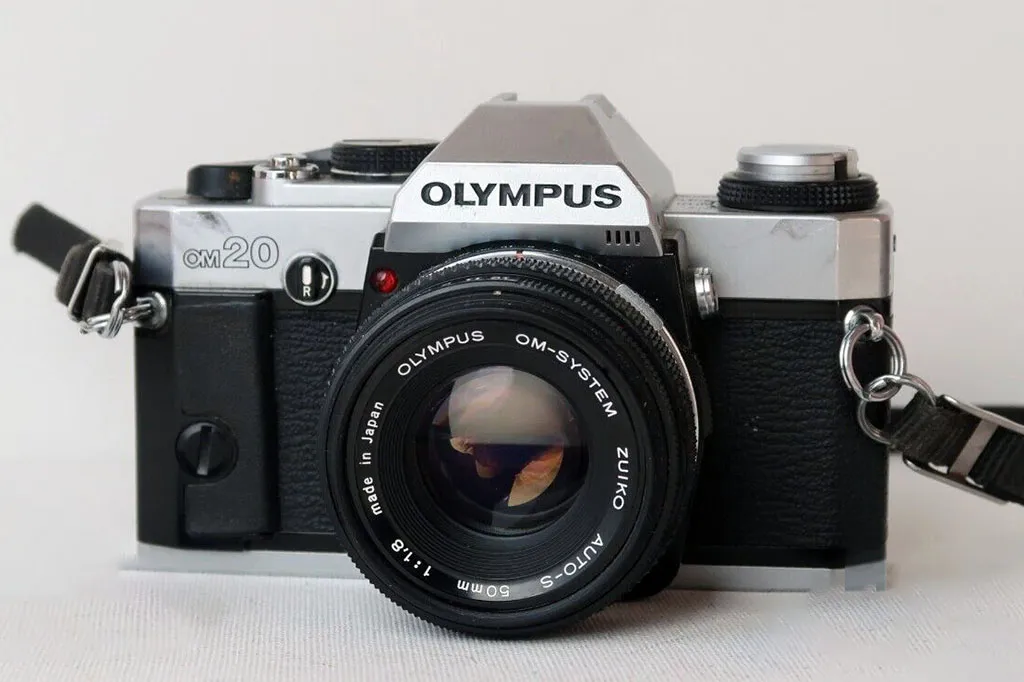
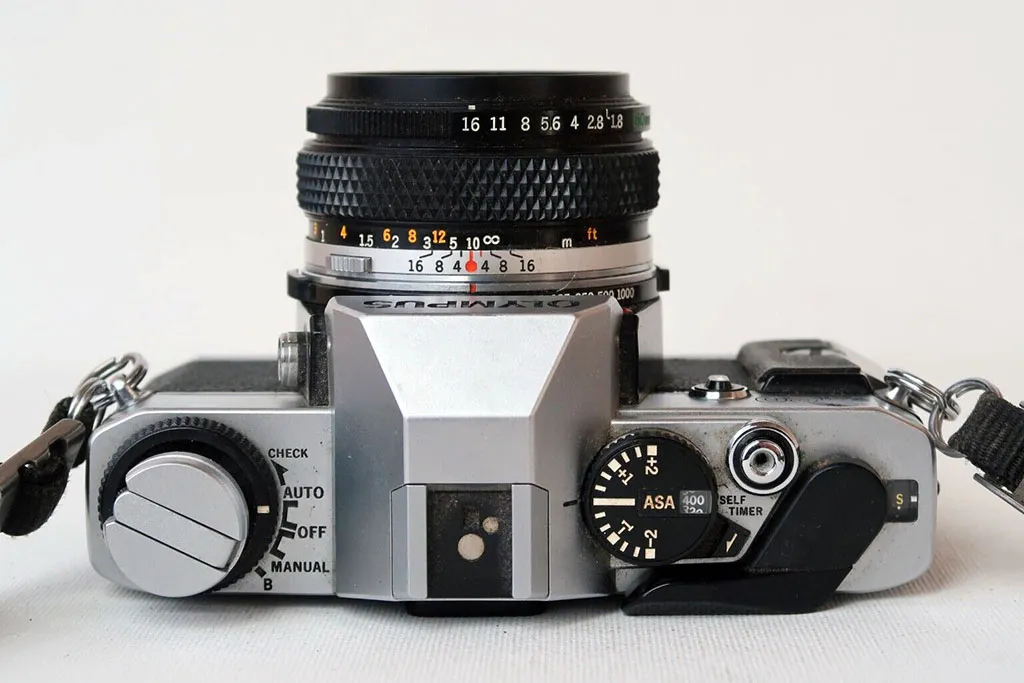
Drawing inspiration from the classic OM-1, the OM-20 incorporates speed settings into a ring built into the camera body.
Although more affordable than Olympus’s single-digit series, the OM-20 offers numerous advantages. It is compatible with Olympus’s high-quality lenses (like the OM-1 and OM-10), known for their excellent color, contrast, and sharpness. Its features include an adjustable shutter speed ring, focus and aperture control, mostly on the lens itself, and a depth of field preview button integrated into the lens.
Its design is simple, sober, and complete, with an automatic mode (aperture priority) and manual controls. The dial for the automatic mode allows exposure adjustments and includes a battery check function. The manual mode, with an integrated light meter, suggests the appropriate shutter speed. Additionally, it features a Bulb mode for long exposures, selected using the dial.
The OM-20 distinguishes itself from the OM-10 by including a cable release socket and offers exposure compensation (+/- 2 stops) in automatic mode. It has an ISO selector and a self-timer button with a mirror lock-up feature to reduce vibration. Film rewind is manual, through a lever and clutch system. Unlike the high-end OM-1, it does not offer a mirror lock-up option.
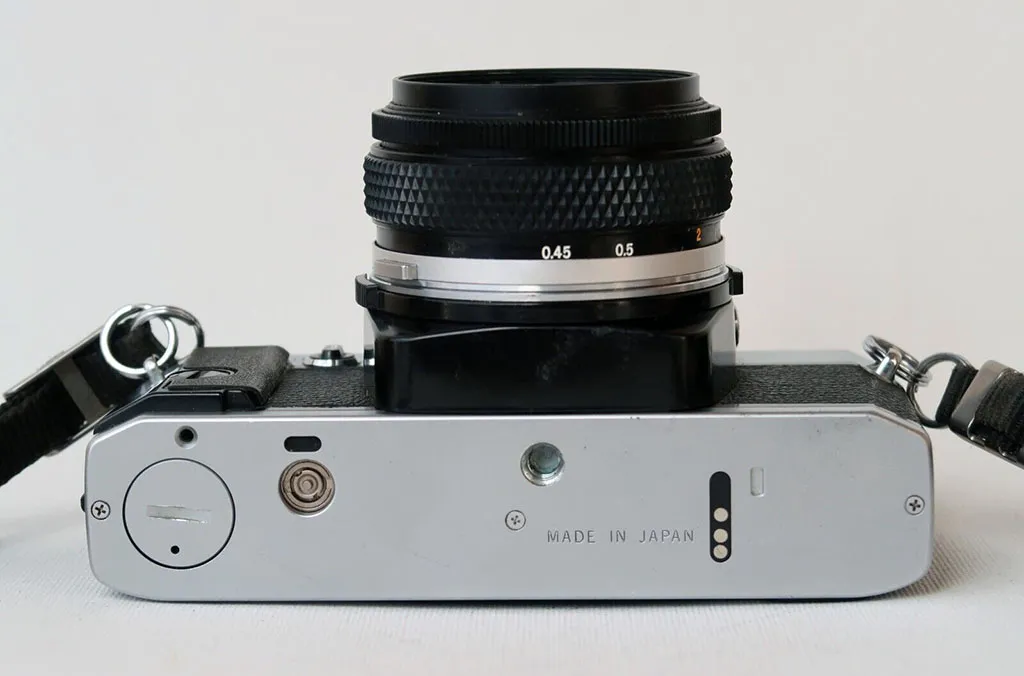
This camera comes with a mini grip and can accommodate a motor drive without removing the grip. It operates on two 1.5V button cell batteries, and the film compartment opens by pulling up the rewind lever. Its fabric shutter curtains require extra care to avoid light leaks.
The OM-20 is also flash-compatible, including dedicated Olympus automatic flashes and others. Its compact size makes it ideal for outdoor and urban photography. Notably, it features a bright and clear viewfinder and is recommended for high-quality photography, comparable to top-tier German optics.
Price
- Approximately $100 US dollars with the Zuiko 50mm f/1.8 lens.
Olympus OM-20 Photos


Final Thoughts
The Olympus OM-20 presents itself as a semi-advanced version of the OM-10, offering a range of additional features that enhance its versatility and functionality. With the inclusion of a manual shutter speed ring, a PC-sync flash connection, LED warnings in the viewfinder, built-in manual metering, and the ability to mount a stable grip, the OM-20 surpasses its counterpart, the OM-10.
Despite these improvements, the OM-20 is often available at a more affordable price than some cameras in its category, making it an attractive choice for both amateur photographers and those seeking a cost-effective alternative with advanced features.