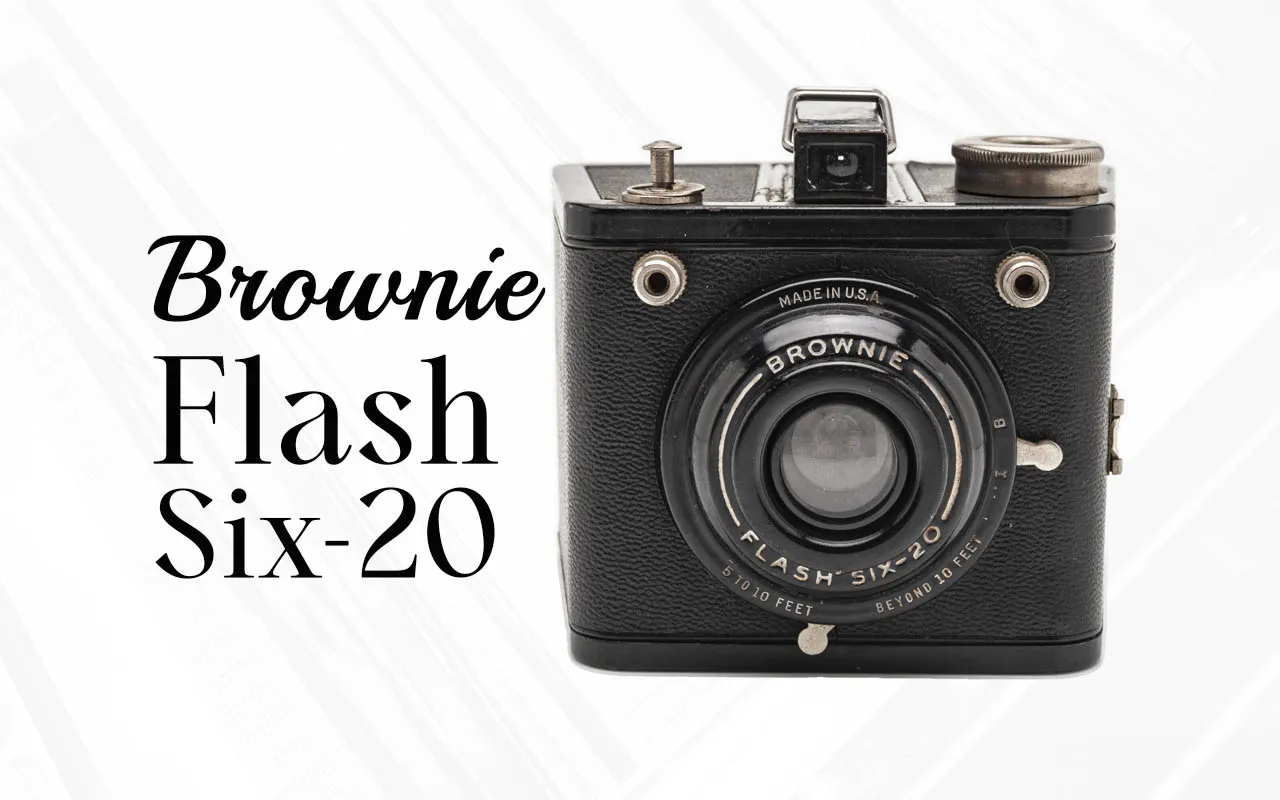
In the cluttered landscape of vintage cameras, the Brownie Flash Six-20 stands out as a relic from a bygone era, making its debut in July 1946 and bowing out of the scene in January 1955.
Hailing from the United States, this metal box body device has a peculiar shape that raises eyebrows even among seasoned photography enthusiasts.
Brownie Flash Six-20 Specs
| Availability Period | July 1946 (to January 1955) |
|---|---|
| Lens Type | Meniscus |
| Shutter Type | Rotary |
| Focusing Modes | ”5 to 10 Feet” and “Beyond” |
| Shutter Speeds | ”B” (bulb), “I” (Instant) |
| Aperture Range | Approximately F/11 to F/16 |
| Film Format | 620 (discontinued) |
| Negative Size | 6x9cm |
| Viewfinder Type | Optical Direct Vision |
| Built-in Features | Closeup Lens, Multiple Exposure Guard |
| Flash Compatibility | Requires Cumbersome Flashgun |
| Tripod Mount | 3/8 inch |
| Film Loading Mechanism | ”Break Apart” Lever |
| Dimensions (Body) | 85 x 104 x 118 mm |
| Weight | 390g |
| Special Features | Leveling Tab (when unfolded) |
| Film Advancement | Knob for Film Advancement |
| Frame Tracking | Small Red Eye on the Back |
Features and Quirks
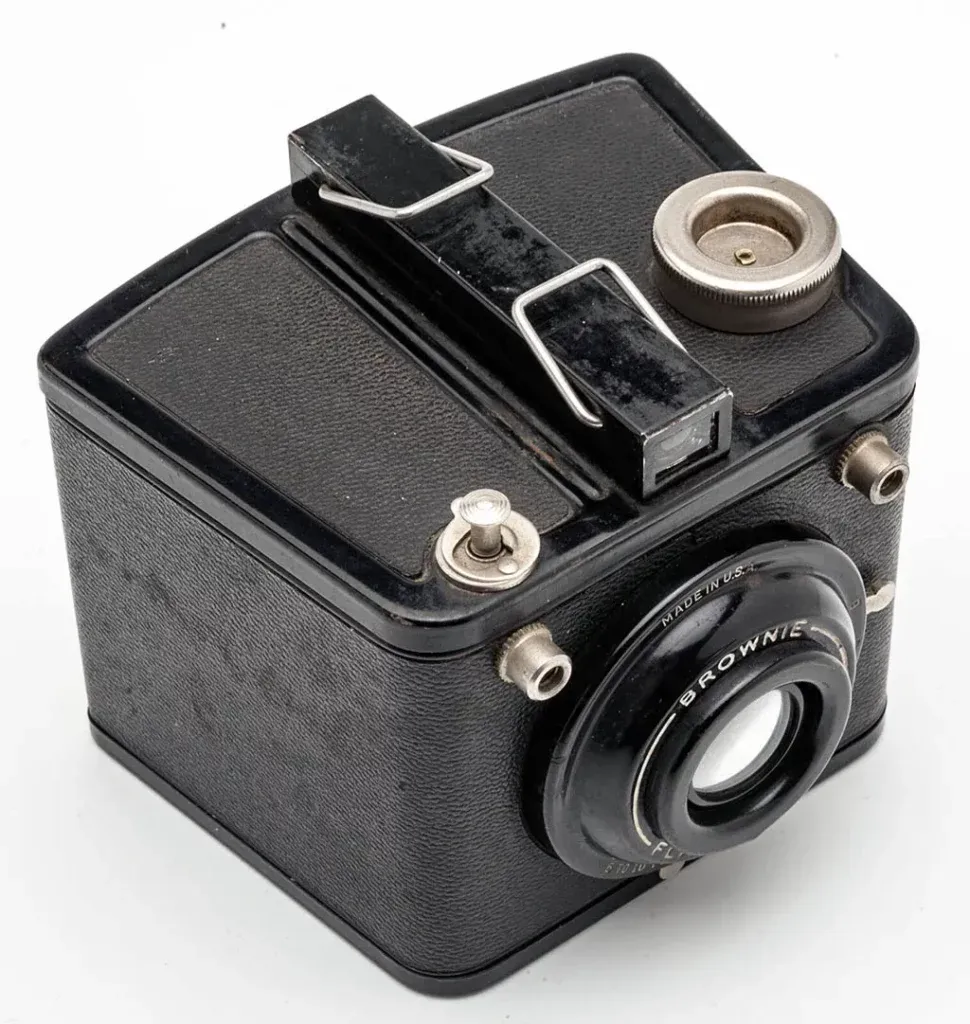
Armed with a Meniscus lens and a Rotary shutter, the Six-20 Flash Brownie Camera, later renamed the Brownie Flash Six-20, boasts a handful of features that set it apart in the market.
Its optical direct vision finder, built-in closeup lens, and the ability to handle time exposure add a dash of versatility to its repertoire. However, don’t let the seemingly impressive specs fool you; there are quirks to be found beneath the surface.
Eccentric Design and Practicality
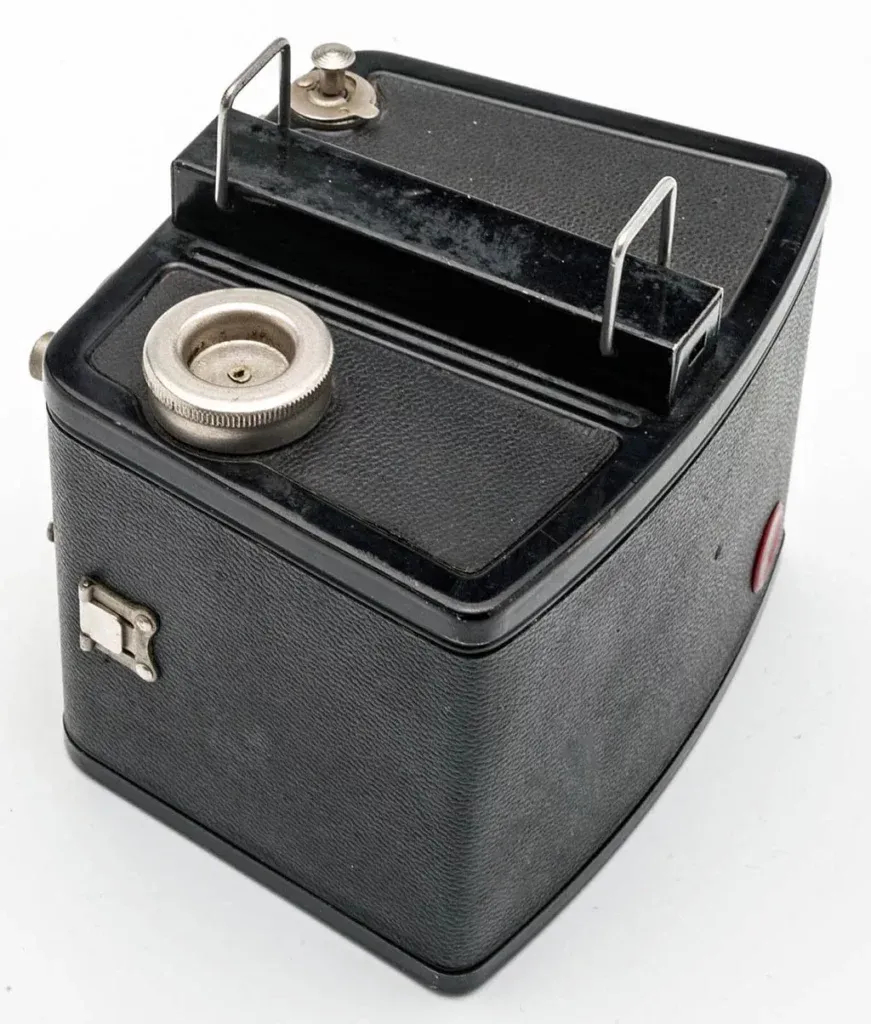
One of the camera’s quirks lies in its compatibility with a cumbersome flashgun, a piece of equipment that adds more hassle than convenience. The lack of multiple apertures might leave discerning photographers wanting more, but the camera compensates with a built-in portrait lens, multiple exposure guard, and a tripod socket.
Not to forget the leveling tab that reveals itself when unfolded, a subtle nod to practicality in an otherwise eccentric design.
Transport yourself back to the 1940s, an era brimming with ingenious and ostentatious cameras in North America. The Brownie Flash Six-20 shares the stage with notable counterparts like Graflex, Ed Land’s Polaroid, Herbert, George, Imperial 12, Argus, and of course, its predecessor, the Six-20 Flash Brownie.
Vintage Film and Ingenuity
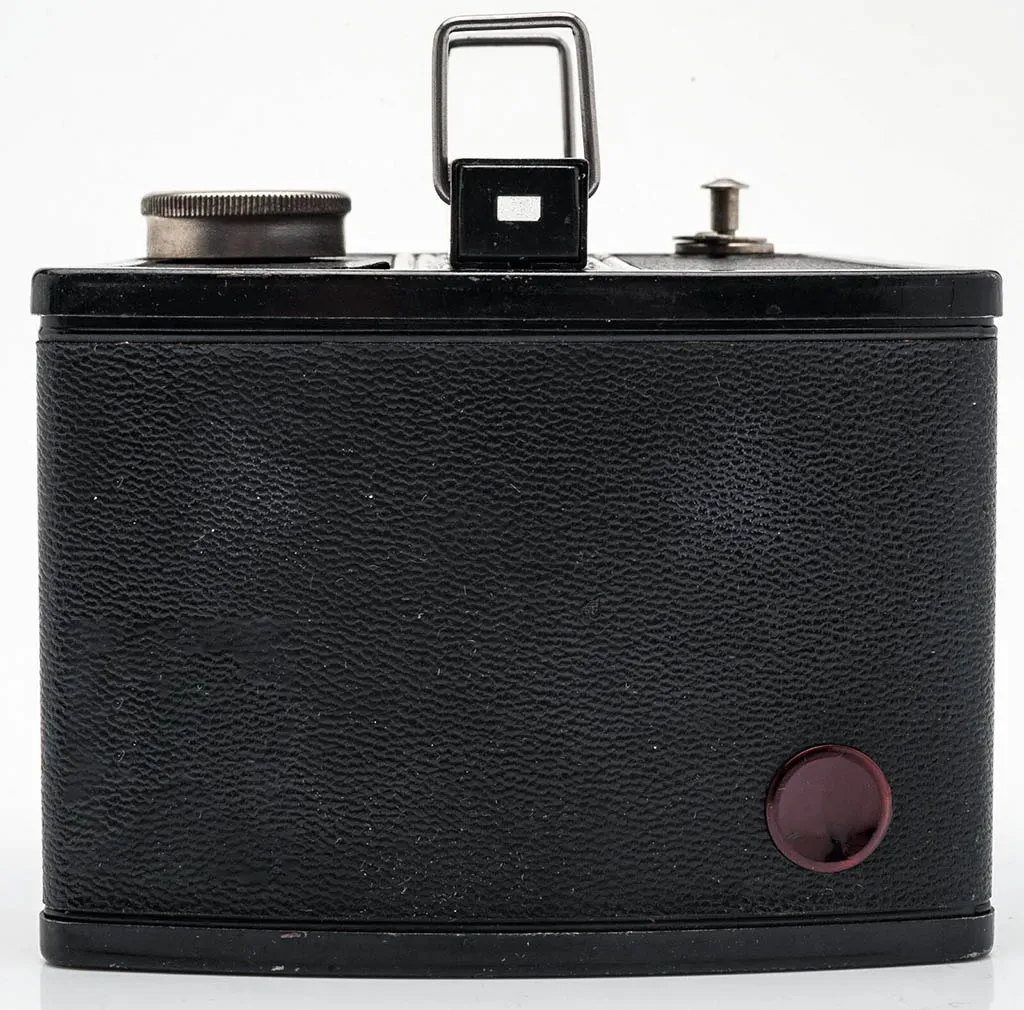
In its heyday, the camera embraced the 620 film, a discontinued format but remarkably similar to the modern 120 film. The hulking 6x9cm negative size captures moments with a certain vintage charm, succeeding the Six-20 Flash Brownie and accompanied by other models like the Six-20 Brownie Special and Brownie Special 616.
Handling the 620 film today requires a bit of ingenuity. You face two options for contemporary use: either trim 120 spools or embark on the soul-crushing yet doable journey of re-spooling onto vintage 620 spools. The latter might test your patience, but it’s a testament to the camera’s enduring legacy that enthusiasts are willing to endure.
Technical Charm


The all-metal, retro body of the Brownie Flash Six-20 houses a camera with two focusing modes – “5 to 10 Feet” and “Beyond.” Its shutter speeds, limited to “B” (bulb) and “I” (Instant), and a constant aperture hovering around F/11ish to F/16ish, might not cater to those seeking a range of creative control.
Yet, the rough, heavy shutter release button with a fail-safe lock, the satisfying knob for film advancement, and the small red eye on the back for frame tracking impart a certain charm to the shooting process.
The optical viewfinder, coupled with a 3/8 inch tripod mount and a “break apart” lever for film loading, adds a touch of functionality to the otherwise idiosyncratic camera. The 6x9 negatives it produces boast high resolution on scans, making it a favorite among film enthusiasts seeking a tangible connection to the past.
Indestructible and Affordable
Despite its quirks, or perhaps because of them, the Brownie Flash Six-20 has garnered a reputation for being nearly indestructible. This, coupled with its affordability, positions it as an ideal choice for both beginners dipping their toes into the world of film photography and disillusioned professionals seeking refuge from the complexities of modern gear.
Price
- Depending on the condition, the Brownie Flash Six-20 can cost between $10 and $20 USD in the online second-hand market.
Brownie Flash Six-20 Photos
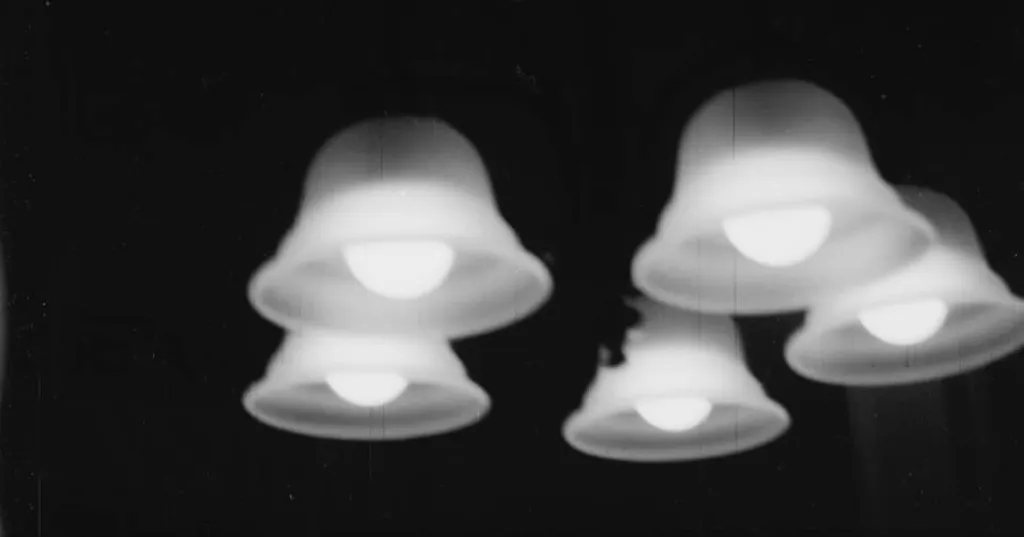
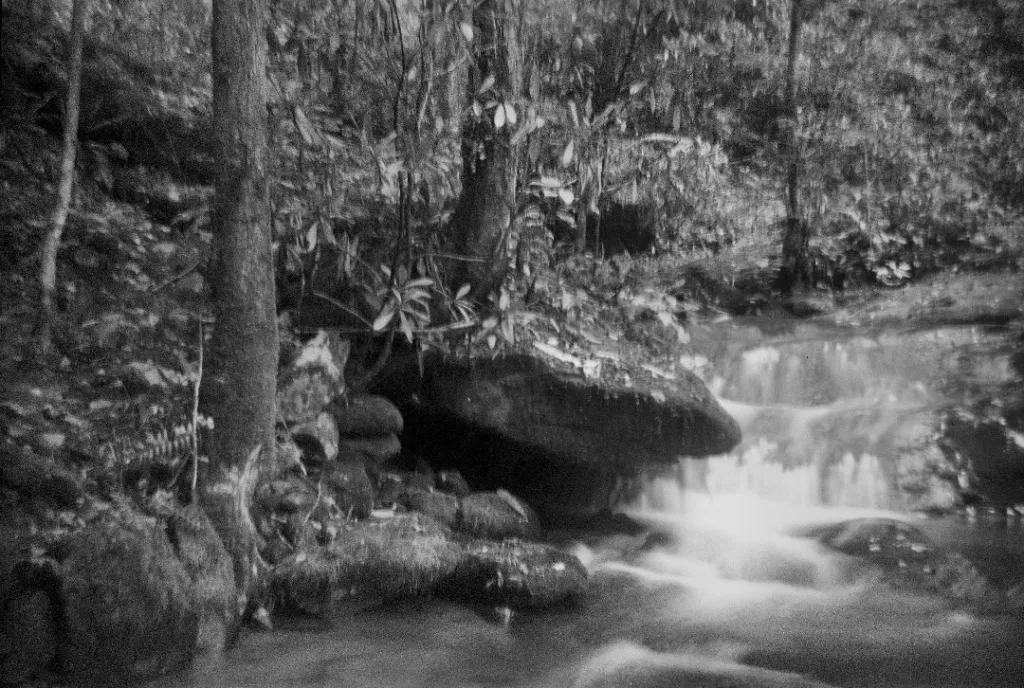

Timeless Photographic History
In the world of vintage cameras, the Brownie Flash Six-20 may not be flawless, but its unique blend of character, durability, and affordability ensures that it remains a timeless piece of photographic history.