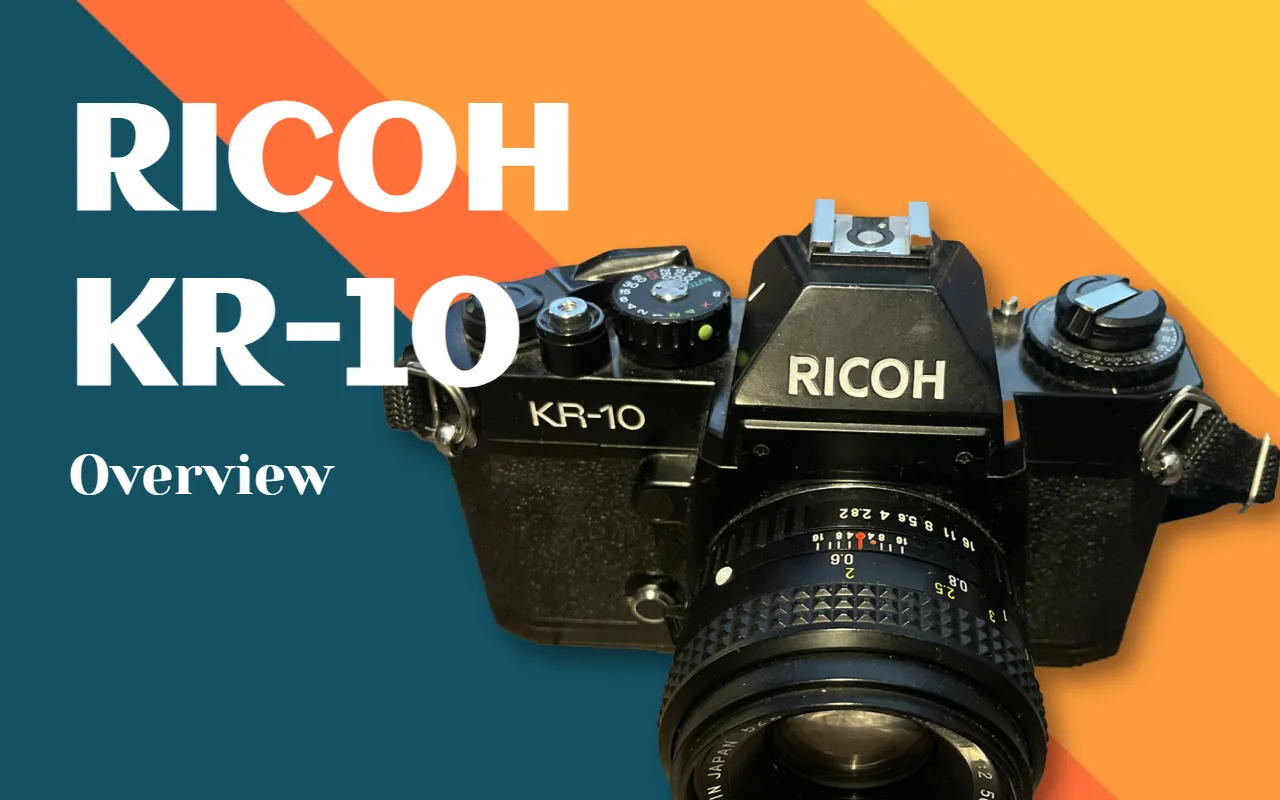
The Ricoh KR-10, a 35mm SLR camera, was introduced in the early 1980s, marking a notable entry in the analog camera market. This article aims to provide an impartial review of its features, performance, and usability to inform potential users and enthusiasts.
Developed in Japan, the Ricoh KR-10 was known for its affordability and compatibility with Pentax lenses. This camera was among the early models to make SLR photography accessible to a broader audience.
Ricoh KR-10 Specs
| Feature | Description |
|---|---|
| Camera Model | Ricoh KR-10 |
| Type | 35mm SLR Camera |
| Year of Introduction | 1980 |
| Shutter Speed Range | 1/1000 to 4 seconds + Bulb mode |
| Flash Synchronization | 1/125 |
| Shutter Type | Electronically controlled metal |
| Aperture Priority Mode | Available |
| Manual Mode | Available |
| Focus System | Split-screen diagonal focus |
| Lens Mount | Pentax K-mount |
| Metering Display | Needle display in viewfinder |
| ISO Range | 12 to 3200 |
| Battery Requirement | LR-44 batteries |
| Weight | Approx. 545 grams (without lens) |
Camera Details


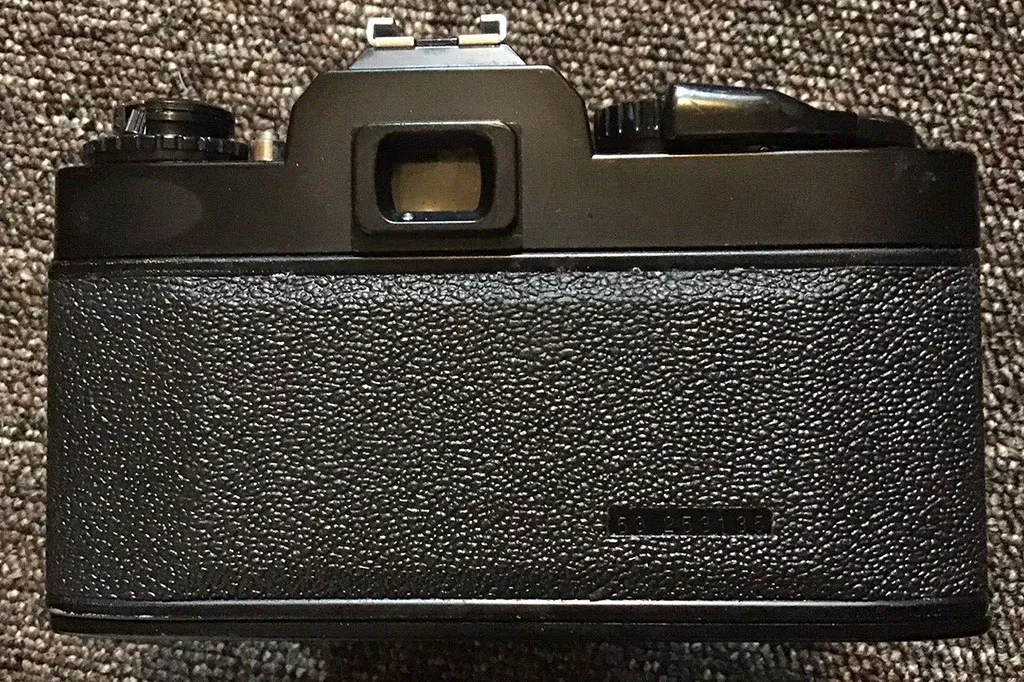
The KR-10 featured an aperture-priority mode, allowing for automatic adjustment of shutter speed based on the aperture setting. The camera offered a shutter speed range from 1/1000 to 4 seconds, along with a bulb mode for long exposures.
It provided flash synchronization at 1/125, suitable for various lighting conditions. The KR-10 had a metal shutter with electronic control, operating on batteries. The design included a split-screen diagonal focus system, enhancing focusing accuracy.
Usability and User Experience
The KR-10 was known for its user-friendly design, catering to both experienced photographers and beginners. The manual mode allowed for full control over exposure settings, appealing to those seeking creative freedom. Despite its robust features, the camera was criticized for a less refined operation compared to contemporaries like the Nikon FE and Pentax MX.
In comparison to its peers, such as the Nikon FE, the KR-10 was competitively priced and offered similar features. However, its build quality and operational feel were perceived as less premium. The camera was suitable for those looking for a budget-friendly entry into film photography without compromising on essential SLR capabilities.
Price in The Market
- Around $50 US on the second market.
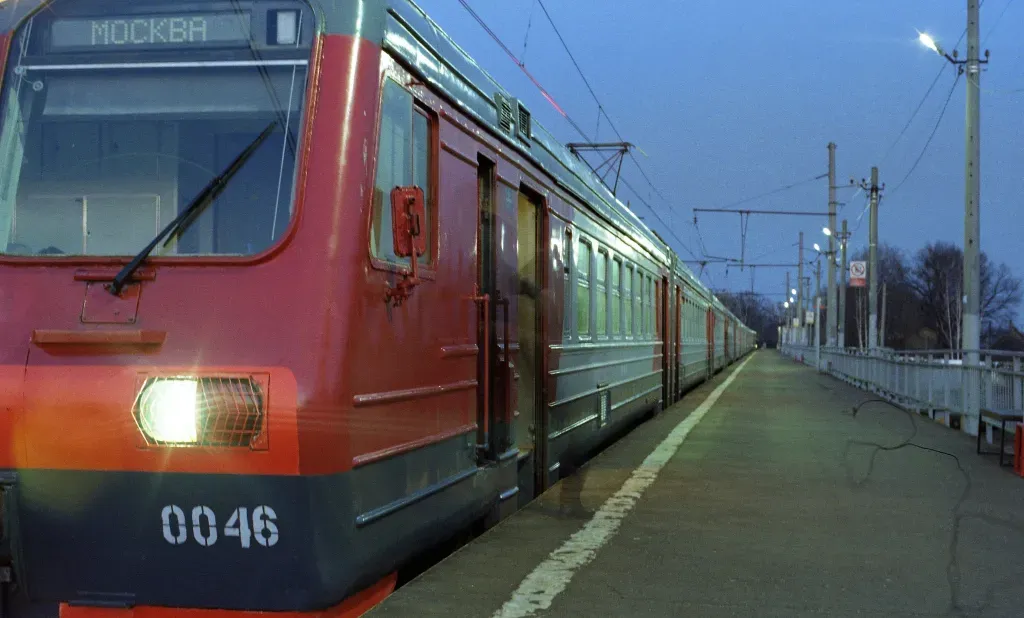
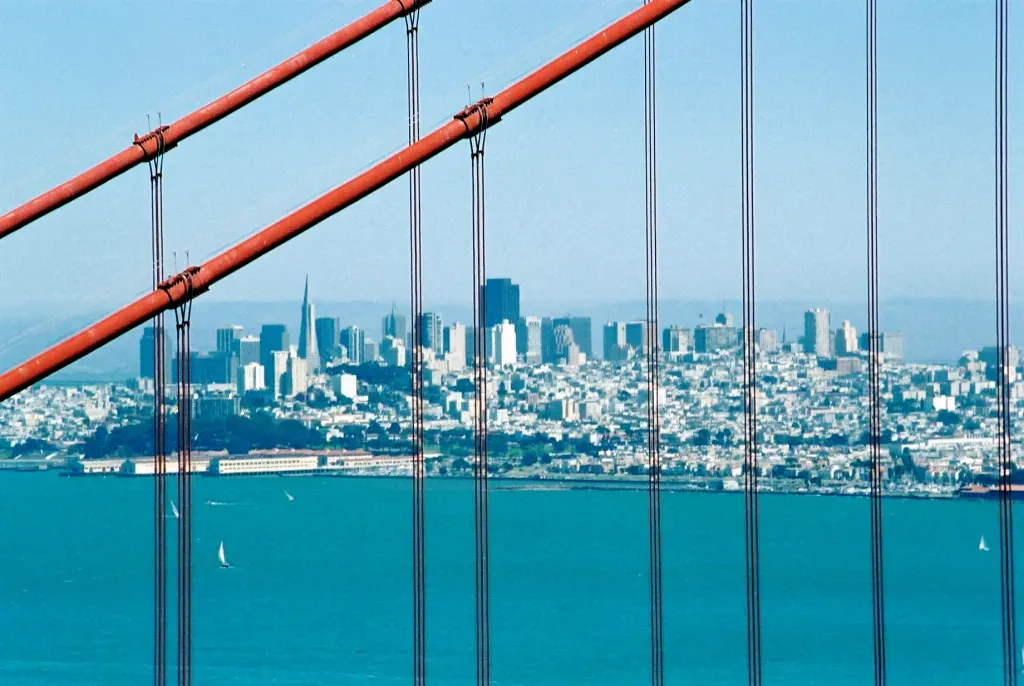
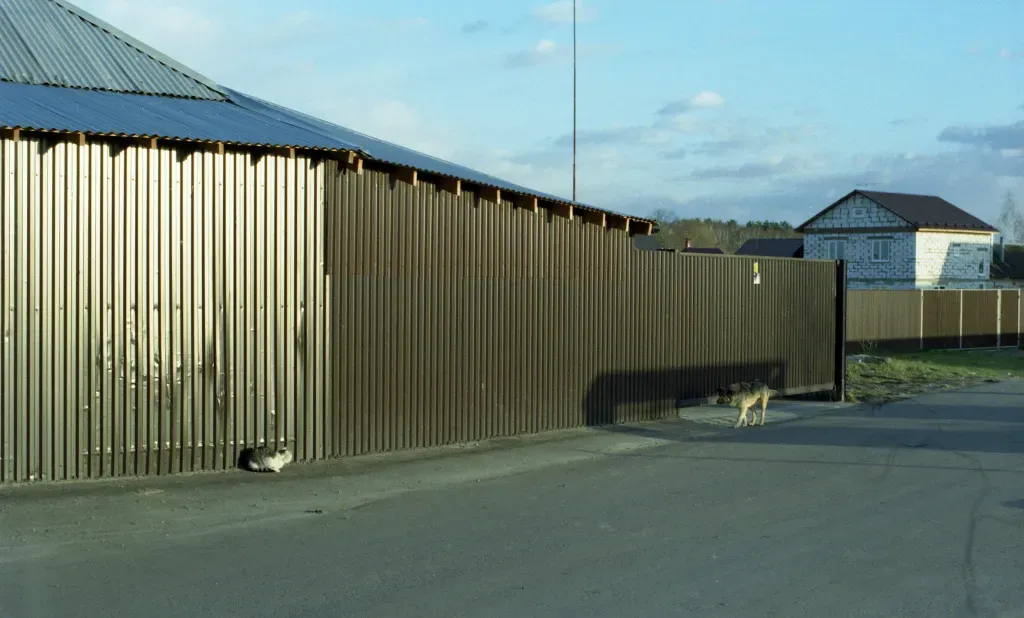
Ricoh KR-10 Photos
Conclusion
The Ricoh KR-10, with its feature set and pricing, carved a niche in the 1980s camera market. It remains a relevant choice for enthusiasts looking to explore film photography with a reliable and straightforward camera. The KR-10’s legacy lies in its blend of functionality and affordability, making it a noteworthy model in the history of SLR cameras.