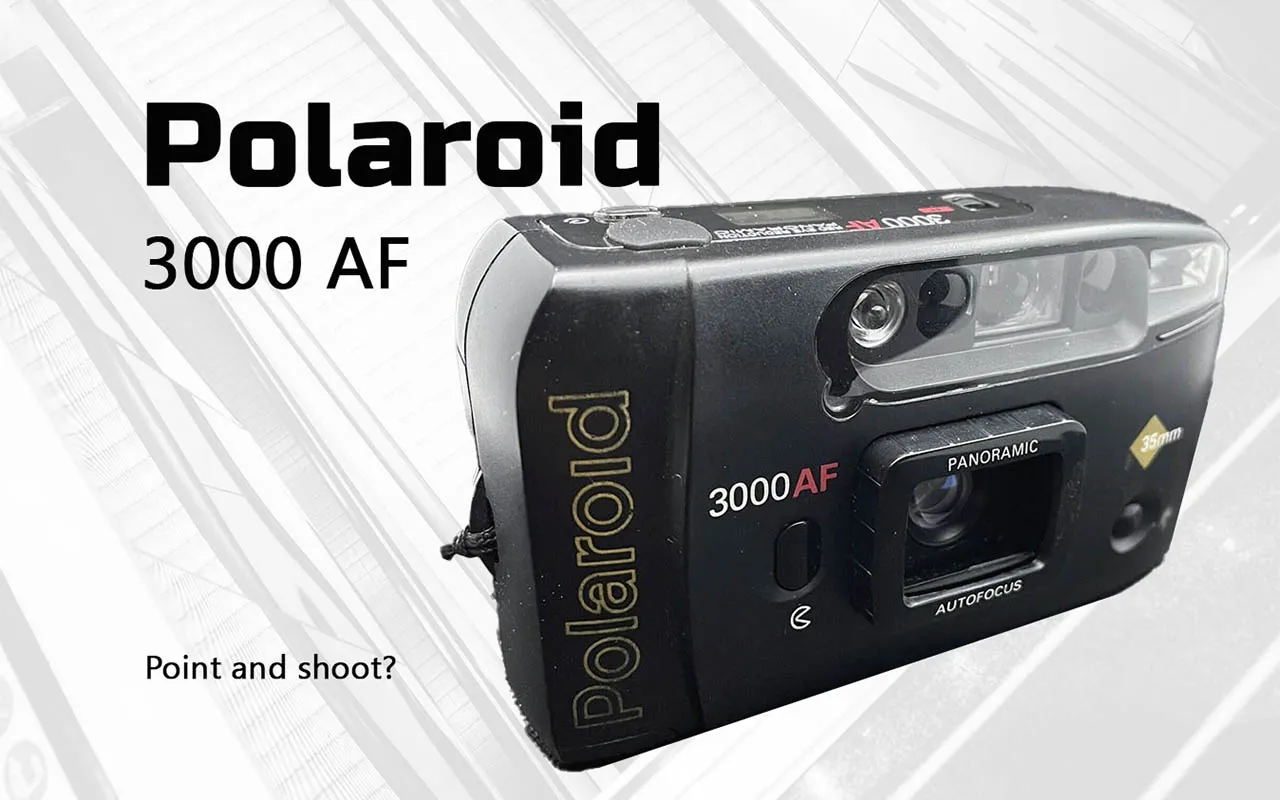
In the realm of vintage photography, the Polaroid 3000 AF film compact camera emerges as a curious artifact, an autofocusing point-and-shoot device that walks the fine line between simplicity and functionality.
This unassuming camera, while not without its quirks, manages to carve a niche for itself in the world of film photography.
Polaroid 3000 AF Specs
| Year Release | 1997 |
|---|---|
| Camera Model | Vintage Polaroid 3000 AF |
| Camera type | Point And Shoot Film Camera |
| Focus System | AF (Autofocus) |
| Main Feature | Panoramic Picture Format |
| Viewfinder Type | Optical Viewfinder |
| Lens | Wide-angle 28mm, aperture f/4.5 |
| Focus Range | 1.2m - Infinity |
| Flash | Fill-in/Automatic, Red-eye Reduction |
| Film Sensitivity (ISO) | DX Code: 100 to 400 units |
| Self-Timer | 10-second countdown |
| Film Advance/Rewind | Motorized Automatic |
| Power Source | 2 AA (LR06) Batteries |
| Construction | Plastic |
| Additional Features | Autofocus, LCD Frame Counter, Date Imprint |
| LCD Display | Exposure Counter, Flash Information |
| Hood for Panoramic Shots | Square |
| Manual User Settings | No |
Features
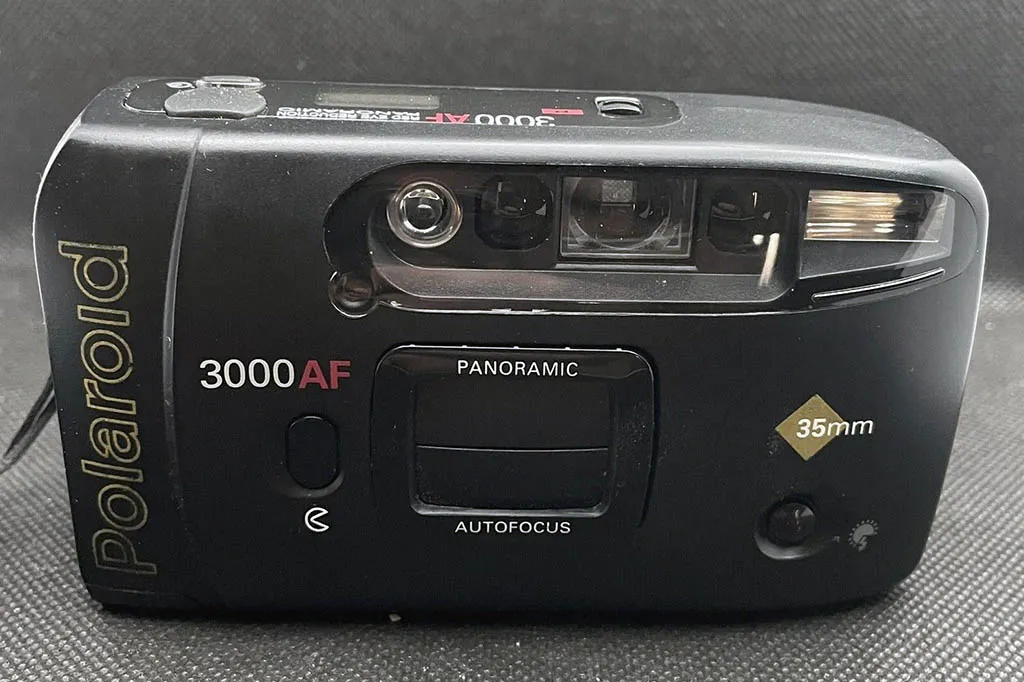
One notable feature is its autofocus capability, a seemingly basic attribute that transforms the act of capturing moments into a fuss-free experience. The camera’s autofocus system extends its reach with the Panoramic Picture Format Option, offering users the chance to delve into the realm of wide-angle compositions.
The Panorama mode, activated by a dedicated switch, lets photographers explore the potential of wide effects, albeit with a tinge of skepticism.
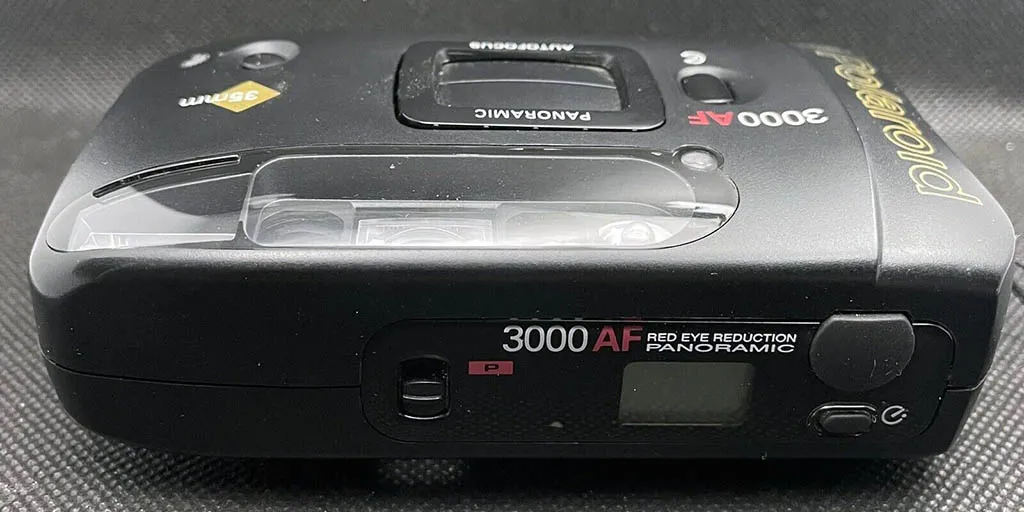
A distinctive trait of the Polaroid 3000 AF is its ability to take panoramic photos with cropped frames. This deviation from the norm introduces an element of unpredictability to each shot, as the camera’s lens captures a slice of the scene, leaving the rest to the imagination.
It’s a feature that prompts both curiosity and caution, as the resulting images unfold within the confines of the unexpected. Functionality similar to the Olympus Stylus Epic, which is a bit smaller and much more popular.
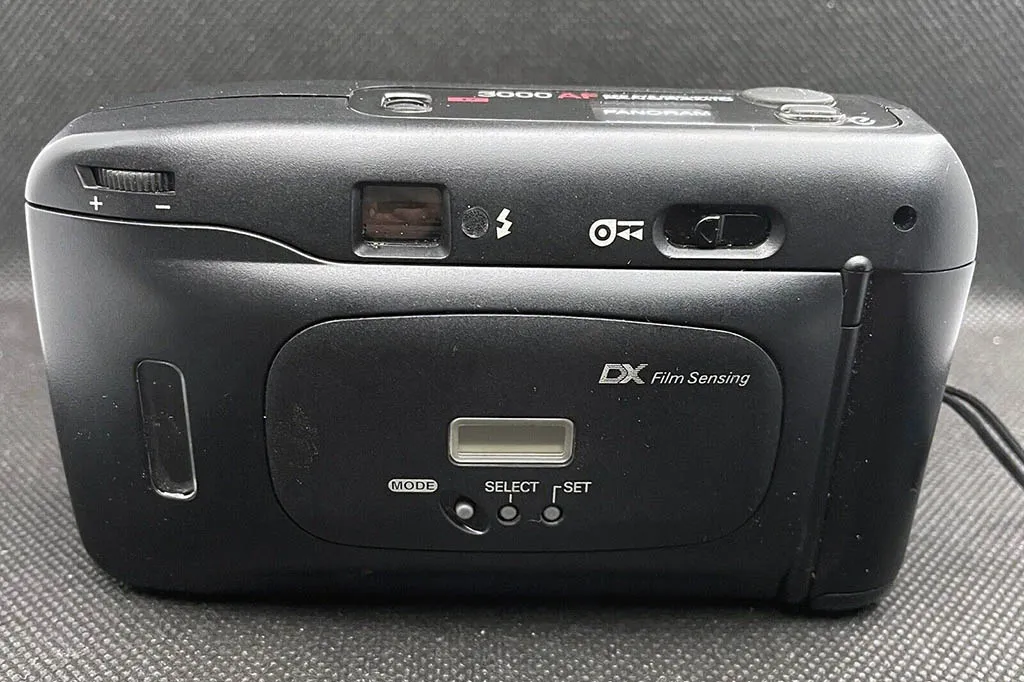
For those with less-than-perfect vision, the adjustable viewfinder becomes a welcome addition. While it may not boast the sophistication of modern electronic viewfinders, its adaptability caters to a broader audience. The wide-angle lens, with a focal length of 28mm and an aperture of f/4.5, delivers serviceable results, capturing scenes with a certain pragmatism rather than an artistic flourish.
The focus range, spanning from 1.2 meters to infinity, accommodates various shooting scenarios. However, the limitations of the camera become apparent when scrutinizing the flash options. The fill-in and automatic settings, while functional, lack the finesse of more contemporary counterparts. The red-eye reduction feature, an attempt to address a common flash-related woe, is a nod to practicality but falls short of eradicating the issue entirely.
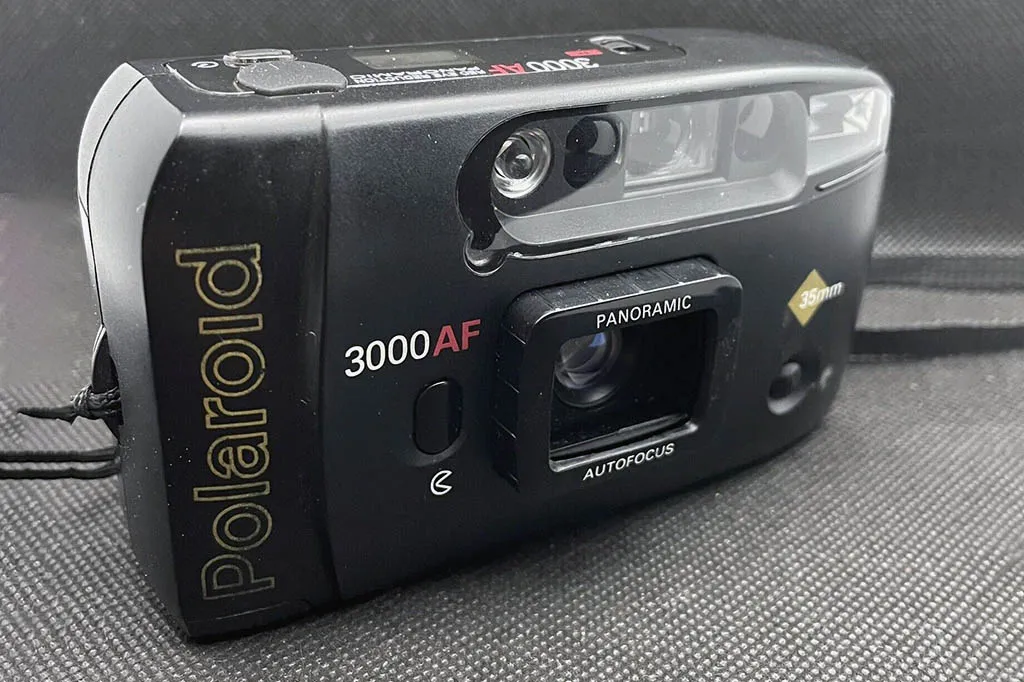
Film sensitivity, determined via the DX code, ranges from ISO 100 to 400 units. This range, while adequate for many situations, may leave enthusiasts yearning for a bit more versatility. The self-timer, offering a 10-second countdown, is a welcome inclusion for those aiming to be both photographer and subject in the frame.
The motorized automatic film advance and rewind contribute to the camera’s user-friendly demeanor. Powered by 2 AA batteries, the Polaroid 3000 AF is a lightweight companion, made of plastic that underscores its affordability rather than durability. The inclusion of autofocus, LCD frame counter, and date imprint on the LCD display adds a touch of modernity to this vintage contraption.
Optional date imprinting may appeal to the meticulous archivist, though its utility is subjective. The large optical viewfinder, coupled with a built-in lens cover, adds a layer of practicality to the camera’s design. The square hood, designed for panoramic shots, is a functional addition but does little to elevate the camera’s aesthetic appeal.
Yet, despite its merits, the Polaroid 3000 AF leaves room for skepticism. The absence of manual user settings limits creative control, placing the photographer at the mercy of the camera’s automated decisions. The activation through a mechanical button, while reliable, lacks the tactile pleasure of more sophisticated mechanisms.
Gentle pressure on the frame locks the camera, an uncomplicated safeguard against unintentional exposures. However, it’s a feature that underscores the camera’s straightforward nature rather than its innovative prowess. In a world where manual controls are often revered, the Polaroid 3000 AF stands as a testament to the bygone era of uncomplicated photography.
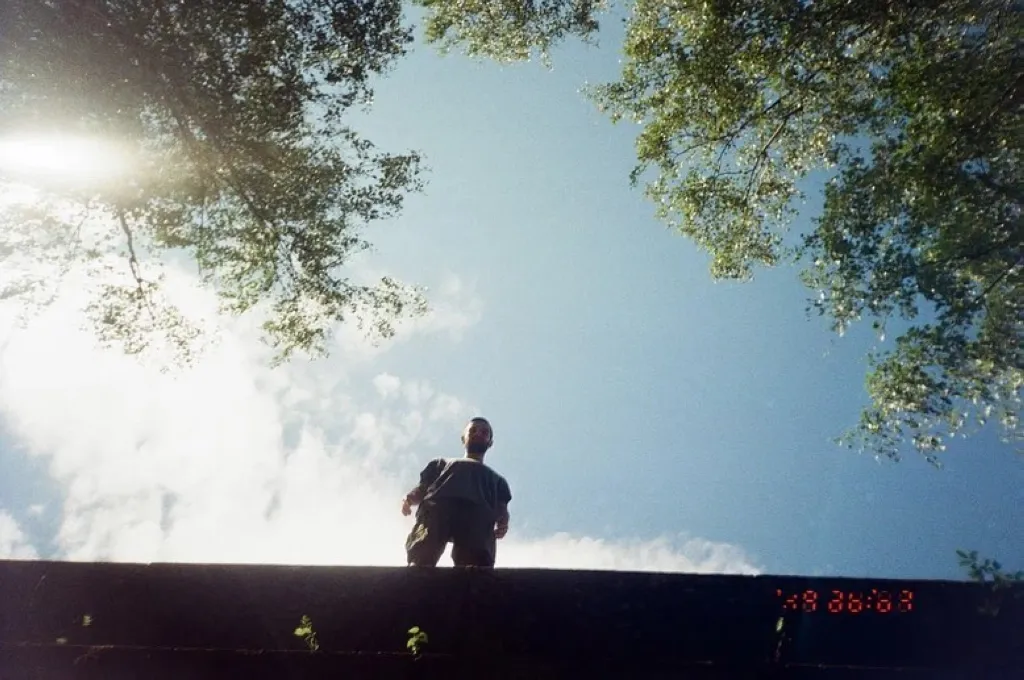
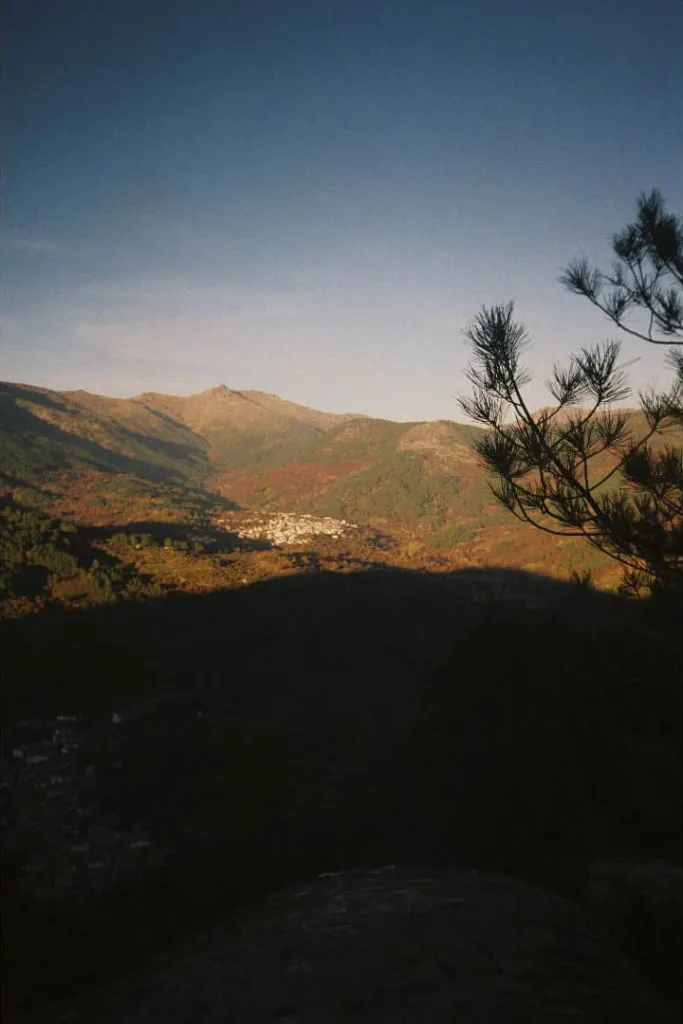
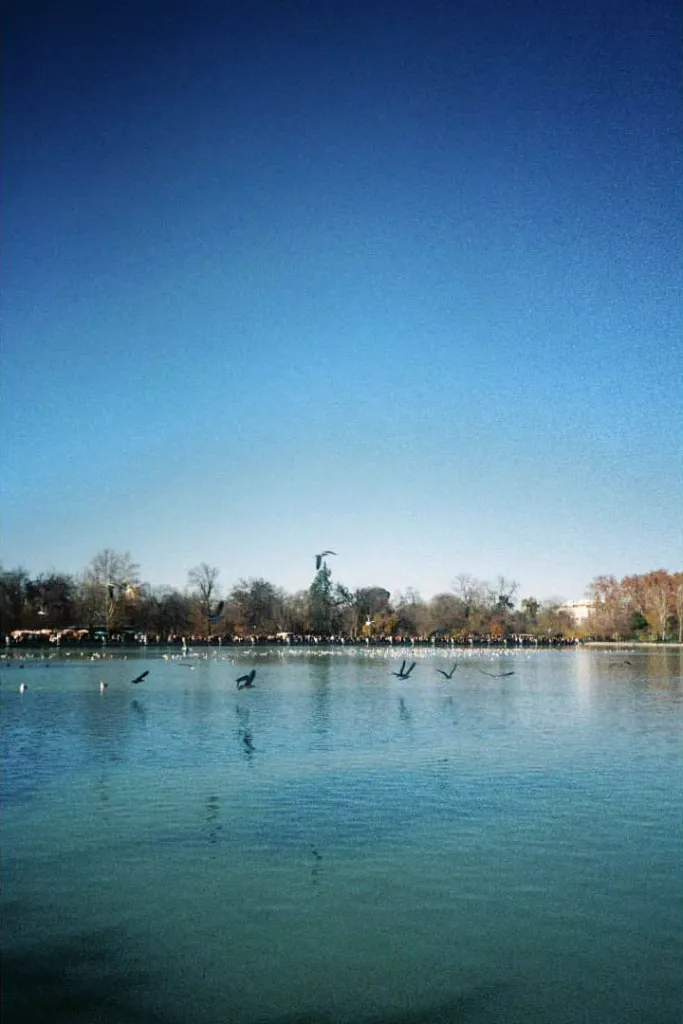
Polaroid 3000 AF Photos

Final Words
The Polaroid 3000 AF film compact camera is a study in contradictions. Its autofocus prowess and panoramic capabilities offer a glimpse into the potential of user-friendly photography, yet its limitations and lack of manual controls cast a shadow over its versatility. For those seeking a nostalgic journey into the past, this camera may be a charming companion, but for the discerning photographer, it serves as a reminder of the trade-offs inherent in the pursuit of simplicity.